


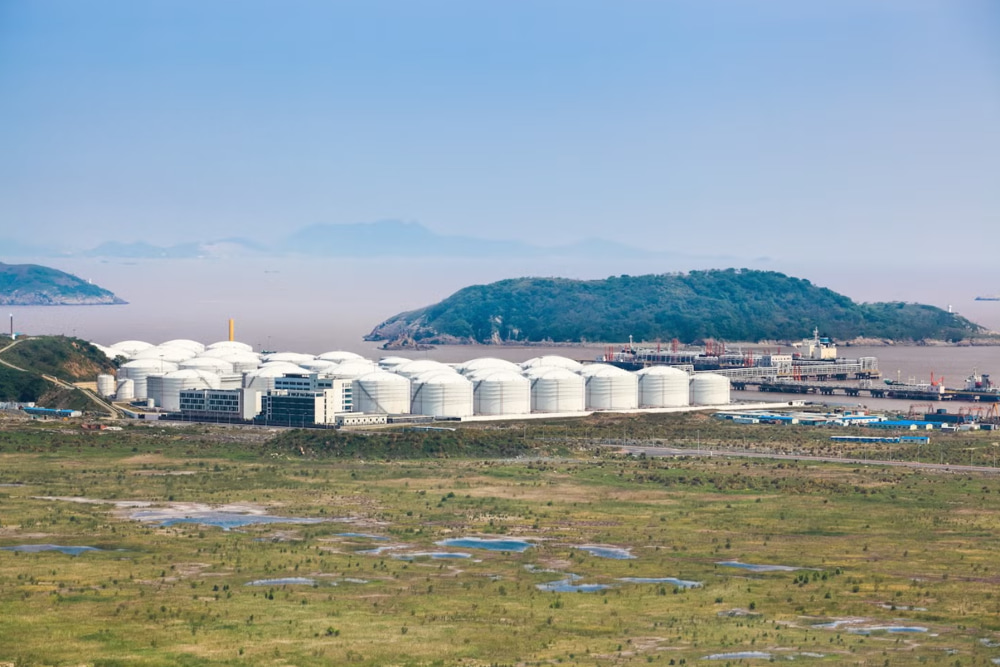
Asia is poised to dominate global liquids storage capacity additions between 2026 and 2030, driven by a robust pipeline of new build and expansion projects across the region, according to new industry analysis.
The continent is also expected to host the highest number of upcoming liquids storage projects worldwide, underscoring sustained investment in storage infrastructure to meet rising crude oil and refined product handling needs, bolster strategic reserves, and support expanding trade flows.
The growth reflects a broader shift in energy dynamics across Asia, where rising energy demand and heightened concerns over energy security are prompting governments and private developers alike to accelerate storage infrastructure investment.
As economies in the region continue to grow and diversify their energy sourcing, the ability to store and manage large volumes of liquids has become a priority.
New build projects are set to play a central role in this expansion, with large-capacity refinery terminals and petroleum reserve developments leading the way.
These projects are being designed to help countries strengthen domestic supply security while also supporting their positions in international trade.
In parallel, expansion projects at existing facilities are expected to contribute to regional storage growth, increasing the capacity of established sites and enhancing their ability to handle both crude oil and refined products efficiently.
China and India are emerging as the two countries at the forefront of Asia’s liquids storage development, leading both the project pipeline and expected capacity additions through the end of the decade.
Their efforts are supporting a dual mandate: reinforcing refining infrastructure while also meeting strategic storage requirements that safeguard against supply disruptions.
In China, several major projects are advancing, including the Zhoushan V Expansion, a refinery terminal development, and the Ningbo V port terminal project.
These initiatives represent some of the most significant upcoming additions to the country’s storage capacity and are expected to reinforce China’s position as a key hub for liquids storage in the region.
India, meanwhile, is focusing heavily on petroleum reserve-type projects.
Notable developments include facilities planned in Bikaner, Chandikhol, and Rajkot, each expected to strengthen the country’s overall storage infrastructure and improve its capacity to manage energy supply risks.
These reserve projects are critical components of India’s broader energy security strategy as the country continues to grow its economy and energy consumption.
Across the region, the liquids storage project pipeline is progressing through varying stages of development.
Roughly half of the identified projects are already under construction, signalling near-term progress toward completion.
The remainder of the pipeline is largely concentrated in the feasibility and approval stages, suggesting that additional projects will move forward in the coming years as planning and regulatory processes advance.
This mix of construction stages indicates that many of the capacity additions expected across Asia are more likely to materialise toward the latter half of the decade, as projects currently in early planning phases advance toward construction and eventual completion.
The combination of new storage facilities and expansions at existing assets is expected to provide the region with a substantial boost in overall liquids handling capability by 2030.
Further details on the broader global outlook for liquids storage development can be found in a new report from GlobalData, titled Global Liquids Storage New Build and Expansion Projects Outlook to 2030, 2026 Edition, which examines regional trends shaping the sector’s growth over the coming years.


